
Fight or Flight vs. Rest and Digest — What Your Body Is Really Doing (And Why It Matters)
Have you ever noticed how your heart races before a big presentation? Or how your stomach feels unsettled when you're stressed? Or why, after a long and overwhelming day, you still can't seem to switch off — even when you're exhausted and desperate for sleep?
This isn't a coincidence. It's your nervous system doing exactly what it was designed to do.
Understanding the two primary modes your body operates in — fight or flight and rest and digest — is one of the most important things you can learn about your own health. Because once you understand it, so much else starts to make sense.
Your Nervous System Has Two Modes
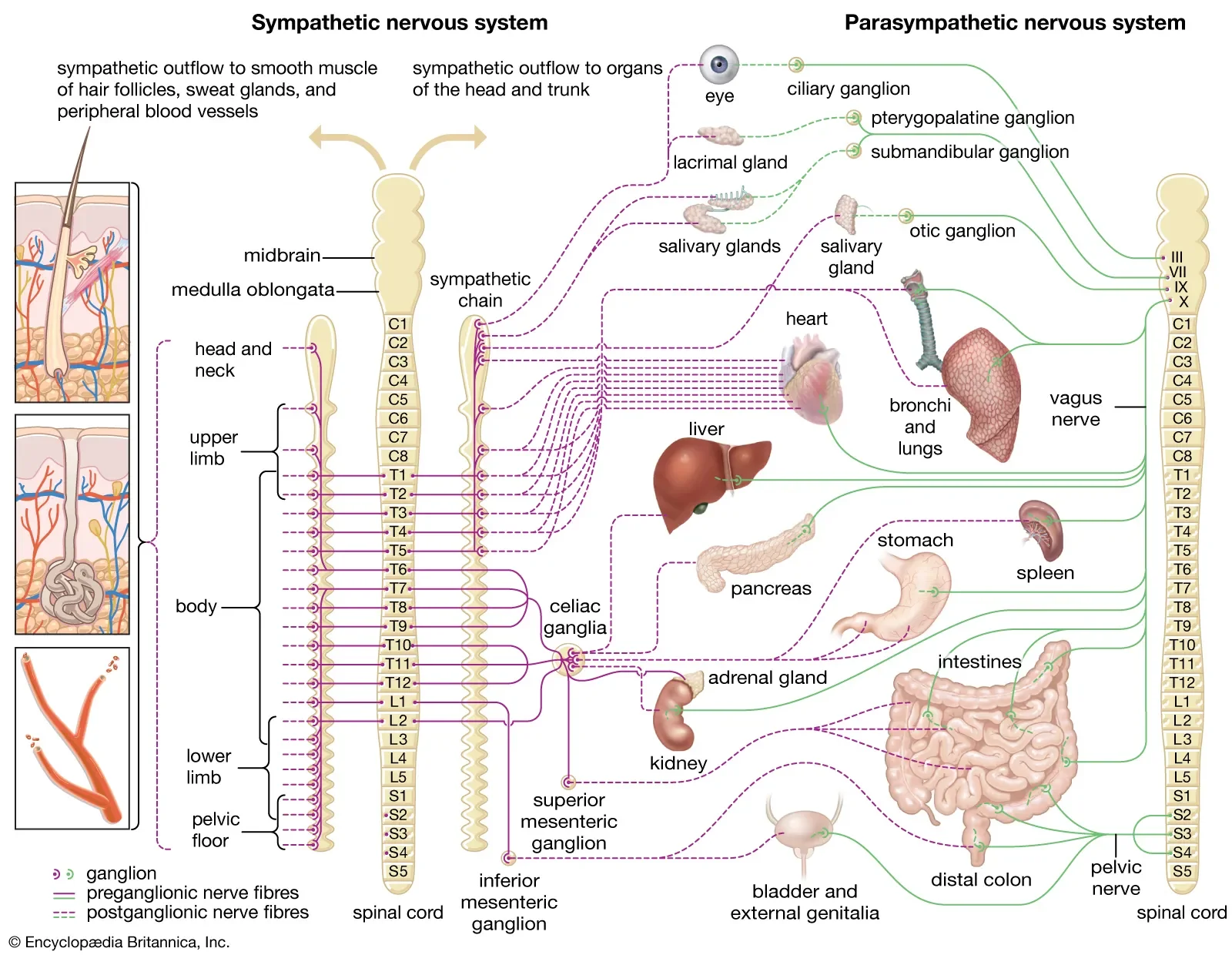
Deep within your nervous system lives a remarkable control system called the autonomic nervous system (ANS). It governs everything your body does automatically — your heartbeat, your breathing, your digestion, your immune response, your sleep, and the way you respond to the world around you.
The autonomic nervous system has two primary branches, and they work a little like a car's accelerator and brake pedal:
The sympathetic nervous system — the accelerator. This is your fight or flight response.
The parasympathetic nervous system — the brake. This is your rest and digest response.
Both are essential. Both are brilliant. The problem begins when the balance between them breaks down.
Fight or Flight — Your Body's Survival System
The fight or flight response is one of the most sophisticated survival mechanisms in nature. When your brain perceives a threat — real or imagined — it triggers a cascade of physiological changes designed to help you survive.
Here's what happens in your body within seconds:
Adrenaline and cortisol flood your system
Your heart rate increases to pump more blood to your muscles
Your breathing becomes faster and more shallow
Blood is redirected away from your digestive organs and toward your arms and legs
Your pupils dilate to take in more of your environment
Your immune system temporarily downregulates — survival is the priority, not healing
Non-essential functions like digestion, reproduction, and deep sleep are put on hold
In the face of genuine danger, this response is life-saving. Your body becomes a machine built for speed, strength, and reaction. It is nothing short of extraordinary.
The challenge is that your nervous system cannot distinguish between a physical threat and a psychological one. A looming work deadline. A difficult conversation. Financial stress. Scrolling through worrying news at 10pm. A pile of unanswered emails. Your nervous system responds to all of these the same way it would respond to a predator — with a full-body alarm response.
And in modern life, for many of us, that alarm never really switches off.
Chronic Sympathetic Activation — When the Accelerator Gets Stuck
When your body is in fight or flight occasionally, it recovers. That's normal and healthy. But when the stress is constant — when the demands of modern life mean your sympathetic nervous system is activated day after day without adequate recovery — the effects begin to compound.
Chronic sympathetic activation can look like:
Persistent anxiety or a sense of dread that never fully goes away
Poor sleep — difficulty falling asleep, staying asleep, or waking unrefreshed
Digestive issues — bloating, constipation, IBS, or a constantly unsettled stomach
Lowered immunity — getting sick frequently or taking a long time to recover
Hormonal disruption — because the stress hormone cortisol competes with reproductive hormones
Difficulty concentrating or making decisions — the prefrontal cortex, responsible for rational thought, is literally less active in fight or flight
Muscle tension, jaw clenching, headaches, and neck or back pain
Emotional reactivity — finding yourself easily overwhelmed, snappy, or tearful
Sound familiar? You are not alone. And you are not broken. Your nervous system is simply doing what it learned to do — protecting you. But it may have forgotten that it's safe to rest.
Rest and Digest — Where Healing Happens
The parasympathetic nervous system — your rest and digest response — is where your body does its most important work.
When you are in this state:
Your heart rate slows and your breathing deepens
Blood flows back to your digestive organs — food is absorbed, nutrients are processed, and waste is eliminated efficiently
Your immune system becomes fully active — repairing, defending, and rebuilding
Growth hormone is released — tissues heal and cells regenerate
Your brain consolidates memory and processes emotion
Deep, restorative sleep becomes possible
You feel calm, connected, clear-headed, and present
This is not laziness. This is not a luxury. Rest and digest is the state in which your body heals, grows, and thrives. Every system in your body — your gut, your heart, your immune system, your brain — functions better here.
The vagus nerve is the superstar of the parasympathetic nervous system. Travelling from your brainstem all the way down through your neck, chest, and abdomen, it innervates your heart, lungs, and digestive organs — carrying the signals that bring your body back to calm. The strength of this signal is measured as vagal tone, and higher vagal tone is associated with better emotional regulation, stronger immunity, healthier digestion, and greater resilience in the face of stress.
Why the Balance Matters for Families
This isn't just about adults. Children's nervous systems are shaped by the environment they develop in — and a child who grows up in a household where the adults around them are chronically stressed is receiving constant co-regulatory cues that the world is not a safe place.
This is not about blame. It is about biology. Our nervous systems are social organs — they take cues from the people around us, particularly those we are closest to. A regulated parent creates the conditions for a regulated child. Which is why supporting your own nervous system is one of the most powerful things you can do for your family.
Equally, children who experience difficult births, early stress, or developmental challenges may have nervous systems that are already leaning sympathetic — already biased toward fight or flight — before they even start school. This can show up as difficulty settling, sleep challenges, sensory sensitivity, behavioural dysregulation, and struggles with focus and attention.
What We Look For at Lume Chiropractic
At Lume Chiropractic, the balance between sympathetic and parasympathetic function is at the heart of everything we assess.
Using the INSiGHT Scanner, we can measure three objective indicators of how your autonomic nervous system is currently functioning:
Heart Rate Variability (HRV) — the most sensitive measure of autonomic balance. Lower HRV indicates sympathetic dominance; higher HRV reflects a more resilient, regulated nervous system.
Neuro-EMG — measures patterns of tension along the neurospinal system, which can indicate where the nervous system is under chronic load.
NeuroThermal scanning — maps temperature patterns along the spine, reflecting areas of autonomic dysregulation.
Together, these scans give us an individualised, objective picture of where your nervous system is sitting on the sympathetic-parasympathetic spectrum — and where it may need support.
Our care is neurologically focused, meaning we look beyond pain and structure to ask a deeper question: how well is your nervous system adapting, regulating, and communicating? And what support does it need to find its way back to balance?
Small Shifts That Help Your Nervous System Find Balance
While neurologically focused chiropractic care addresses the deeper neurological patterns that keep people stuck in sympathetic dominance, there are also everyday practices that support parasympathetic activation:
Slow, extended exhales — your exhale activates the vagus nerve. Try breathing in for 4 counts and out for 6–8.
Cold water on your face — triggers the dive reflex, which stimulates the vagus nerve and slows heart rate.
Humming or singing — the vagus nerve runs through your vocal cords. Using your voice is a gentle, effective way to activate it.
Safe connection — co-regulation through warm, safe relationships is one of the most powerful nervous system regulators we have. It's why community matters. Why a hug matters. Why feeling truly heard by another person matters.
Time in nature — natural environments reduce cortisol, lower heart rate, and shift the nervous system toward parasympathetic dominance.
Consistent, gentle movement — particularly rhythmic movement like walking, swimming, or gentle yoga.
Reducing screen stimulation before sleep — your nervous system reads blue light and fast-moving content as signals to stay alert.
None of these are magic fixes. But practised consistently, they send a clear message to your nervous system: you are safe. You can rest now.
You Were Designed to Heal
Your body is not fighting against you. Your nervous system is not your enemy. It is a brilliant, adaptive, protective system — one that has been doing its best, often under extraordinary pressure, for a very long time.
The goal is not to eliminate your stress response. It is to restore the balance — so that your body can move fluidly between activation and recovery, between challenge and rest, between protecting and healing.
That balance is what we work toward at Lume Chiropractic. For you, and for your whole family.
If you would like to understand how your autonomic nervous system is currently functioning, we invite you to book a nervous system assessment at Lüme Chiropractic — including an INSiGHT Scanner assessment. It's the beginning of a conversation we'd love to have with you.