
An In-depth look at ADHD.
Does your child have trouble paying attention, sitting still, or managing their impulses? If so, you are far from alone.
ADHD is the most common neurodevelopmental condition diagnosed in Australian children, affecting an estimated 6–10% of children and adolescents — or roughly one in every thirteen kids. That's more than two children in the average classroom. In adults, prevalence is estimated between 2–6% of the population, with many going undiagnosed well into adulthood.
Despite how common ADHD is, it remains one of the most misunderstood conditions in healthcare today. For families navigating it, daily life can feel like an uphill battle — impacting school performance, social relationships, self-esteem, and the wellbeing of the whole family.
But what if there was more to the story than just a "deficit" or "disorder"? What if understanding the neurological underpinnings of ADHD could open up a broader conversation about support, wellbeing, and what it means for a child's nervous system to truly thrive?
What is ADHD?
Attention Deficit Hyperactivity Disorder (ADHD) is a neurodevelopmental condition characterised by persistent patterns of inattention, hyperactivity, and impulsivity that affect daily functioning and development.
While every child can be inattentive, restless, or impulsive at times, children with ADHD experience these patterns more frequently, more intensely, and in ways that are not consistent with their developmental stage.
The primary presentations of ADHD include:
Inattention: Difficulty sustaining focus, following multi-step instructions, and organising tasks; easily distracted; appears forgetful or doesn't seem to hear when spoken to directly.
Hyperactivity: Constant movement, fidgeting, or restlessness; difficulty staying seated; excessive talking; a sense of always being "on the go."
Impulsivity: Blurting out responses; interrupting others; acting before thinking through consequences; difficulty waiting for their turn.
These presentations can manifest in three recognised subtypes:
Predominantly Inattentive (formerly known as ADD)
Predominantly Hyperactive-Impulsive
Combined type — presenting with significant features of both
According to the Australian Child and Adolescent Survey of Mental Health and Wellbeing, ADHD affects 8.2% of children aged 4–11, with rates higher in boys (10.9%) than girls (5.4%). However, this gap is likely influenced by underdiagnosis in girls, whose presentations — often more inattentive than hyperactive — tend to be less visible and therefore less frequently identified.
The impact of ADHD extends well beyond the classroom. Children with ADHD often navigate challenges in social connection, emotional regulation, self-esteem, and mental health. Research suggests that up to 50% of children with ADHD also experience anxiety, while 30–50% may show characteristics consistent with Autism Spectrum Disorder. Sensory processing differences and learning difficulties are also commonly seen alongside ADHD.
What's Really Going On? Beyond the "Chemical Imbalance" Theory
For a long time, ADHD has been explained primarily as a chemical imbalance — specifically, an inherited deficit in neurotransmitters like dopamine and norepinephrine. While neurotransmitters are certainly involved, the emerging body of research suggests that this explanation is incomplete.
A growing number of researchers and clinicians now understand ADHD as a multifaceted condition influenced by a combination of genetic, neurological, environmental, and developmental factors. This more holistic view has significant implications for how we support children experiencing ADHD-related challenges.
Key factors now recognised in the research include:
Genetics and heritability — there is a clear genetic component, though genetics alone do not determine outcomes
Prenatal stress and exposure — high maternal stress hormones during pregnancy can influence fetal brain development and nervous system regulation
Birth history — certain birth experiences involving intervention, physical strain, or oxygen disruption may influence early neurological development
Early gut health — the gut-brain axis plays a meaningful role in neurological regulation, and disruption to gut microbiota in early childhood has been associated with increased inflammation and behavioural challenges
Developmental stress — early adverse experiences can alter stress response systems and affect attention, behaviour, and emotional regulation across the lifespan
The critical insight here is that ADHD symptoms may arise from developmental and neurological differences rather than a simple biochemical deficiency — and that understanding those differences opens up possibilities beyond medication alone.
Understanding "The Perfect Storm"
Think of a child's developing nervous system as a finely tuned balance between calm and arousal — a system that needs to be able to respond to challenge and then return to rest.
Now imagine that balance is disrupted — not by one event, but by a series of compounding stressors across early development. Prenatal stress. A difficult birth. Early antibiotic use affecting the gut. Chronic developmental stress in the first years of life.
Individually, any one of these factors may be manageable. But when they occur together, they can create a compounding neurological challenge — one that shows up as the hallmark patterns of ADHD.
This isn't about blame. It's about understanding. And understanding is where informed, compassionate support begins.
The Nervous System at the Heart of ADHD
To understand why nervous system function matters so deeply in the context of ADHD, we need to look at the autonomic nervous system (ANS) — the branch of the nervous system that governs all unconscious body functions, from digestion and immune response to heart rate, sleep, and stress regulation.
The ANS has two primary branches:
The sympathetic nervous system — the "fight, flight or freeze" response, activated when the body perceives threat or demand.
The parasympathetic nervous system — the "rest, digest and regulate" response, responsible for recovery, calm, and connection.
In a well-regulated nervous system, these two branches work in balance — responding to demands and returning to rest when the stressor has passed.
In many children experiencing ADHD-related challenges, this balance is disrupted. The sympathetic system may be chronically dominant — the "accelerator" is stuck on, and the "brake" is struggling to engage. This can manifest differently in different children:
Some present as highly activated — hyperactive, impulsive, emotionally reactive, sensory-sensitive, and difficult to settle. Their nervous system is running hot.
Others present as more withdrawn or flat — struggling to process information, initiate tasks, or maintain attention. Their nervous system has moved into a kind of protective shutdown.
Both presentations reflect a nervous system doing its best to cope — not a child who is choosing to be difficult.
A key player in all of this is the vagus nerve — the longest nerve in the body, originating in the brainstem and travelling through the neck and torso to innervate the heart, lungs, gut, and other vital organs. The vagus nerve is central to parasympathetic function and plays a critical role in emotional regulation, social engagement, and the ability to shift out of survival states. Research has found that children with ADHD tend to show lower vagal tone, suggesting that vagus nerve function may be a meaningful factor in the neurological picture of ADHD.
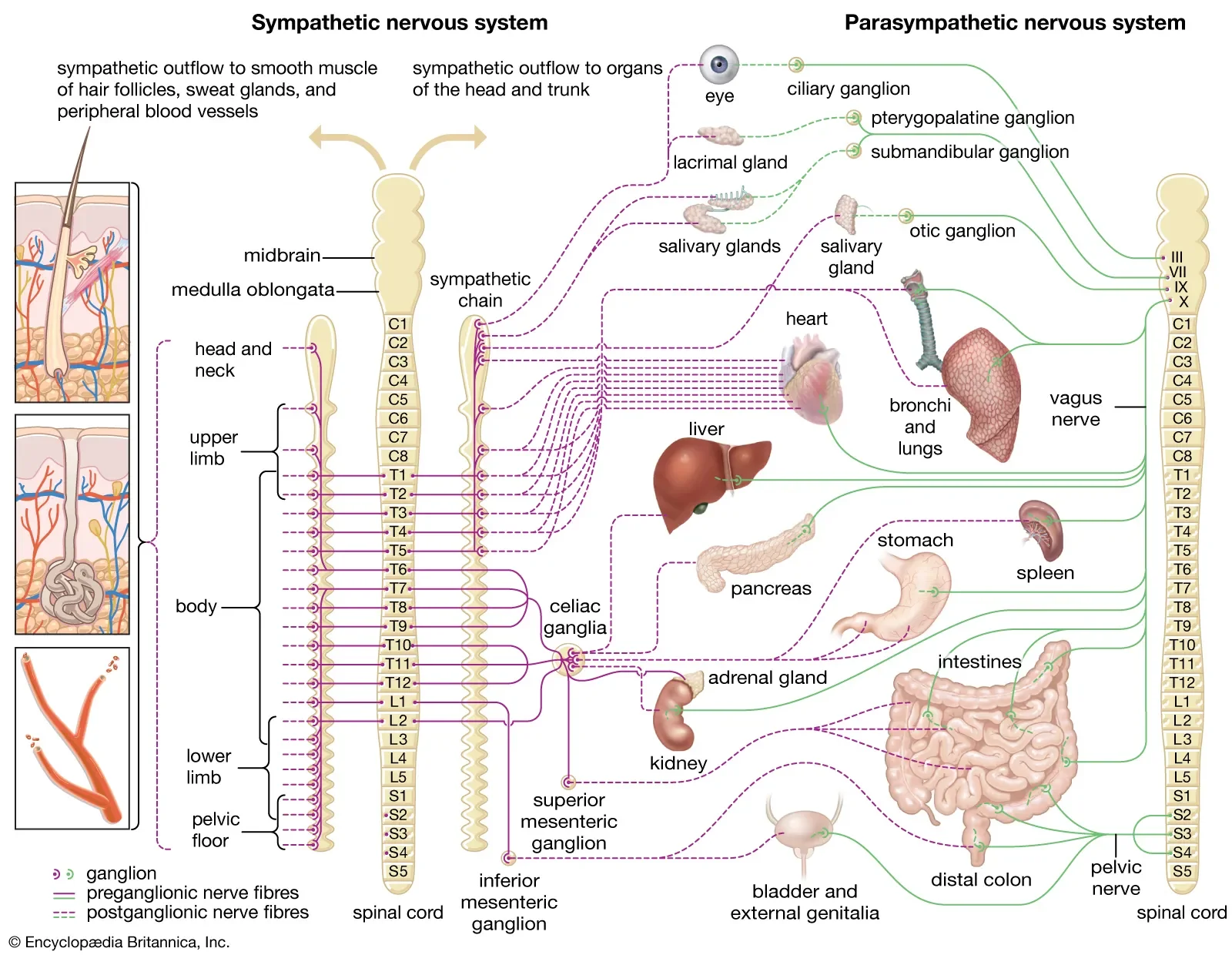
The Autonomic Nervous System
How the INSiGHT Scanner Helps Us Understand the Nervous System
At Lume Chiropractic, one of the tools we use to gain a clearer, objective picture of nervous system function is the INSiGHT Scanner — a non-invasive neurological assessment technology used in neurologically focused chiropractic practices worldwide.
The INSiGHT Scanner measures three key indicators of nervous system health:
NeuroThermal scanning measures temperature patterns along the spine, which can reflect areas of autonomic dysregulation — where the nervous system is working unevenly or under sustained stress.
Neuro-EMG (surface electromyography) measures patterns of muscle tension along the neurospinal system. Elevated or asymmetrical readings can indicate areas where the nervous system is under chronic load — often correlating with sensory overload, sleep challenges, gut issues, and behavioural dysregulation.
Heart Rate Variability (HRV) measures the balance and adaptability of the autonomic nervous system. Lower HRV is associated with sympathetic dominance — a state of chronic stress — while higher HRV reflects a more regulated, resilient nervous system.
Together, these three scans create a detailed, individualised map of how a child's nervous system is currently functioning — where it is coping well, and where it may be under load. This gives us an objective starting point for understanding what might be driving a child's challenges, and helps us track changes in nervous system function over time.
It is important to note that the INSiGHT Scanner is a neurological assessment tool, not a diagnostic device for ADHD. Rather, it provides valuable information about the state of the nervous system — information that is often missing from conventional assessment pathways, and that can meaningfully inform a holistic, family-centred approach to support.

An example of an insight scan
What We Offer at Lume Chiropractic
At Lume Chiropractic, we have substantial experience working with families navigating neurodevelopmental challenges. Our approach is neurologically focused — meaning we look beyond structure and pain to assess how the nervous system is regulating, adapting, and communicating.
Using the INSiGHT Scanner alongside a thorough consultation and case history, we can gain a clearer picture of your child's neurological function and identify areas where the nervous system may benefit from support.
Our care is gentle, non-invasive, and tailored to each child's individual presentation and needs. We work collaboratively with families and, where appropriate, with other members of a child's healthcare team.
We offer is a neurologically informed perspective on your child's health — one that takes seriously the connection between the nervous system, the spine, and overall wellbeing, and that complements the care your family is already receiving.
If you would like to explore whether neurologically focused chiropractic care might be a helpful addition to your child's support network, we warmly invite you to get in touch and book an initial consultation, including INSiGHT Scan assessment.
We are here to support the whole child — and the whole family. 💚