
When the Brain Can't Read the Body: Why Focus Starts With the Nervous System
Ever notice how impossible it is to concentrate when you're stressed, wired, or running on empty? That's not a discipline problem. It's a nervous system problem.
Your ability to focus, settle, and sustain attention depends on which state your autonomic nervous system is in from moment to moment.
The Three States of Attention
Through a polyvagal lens, we can think of the nervous system moving between three broad states:
Regulated (ventral vagal): You feel calm, safe, and engaged. This is the only state in which sustained, flexible attention is genuinely possible — the thinking brain is fully "online" and able to plan, filter distractions, and follow through.
Fight or flight (sympathetic): Attention narrows toward scanning for threat. This can look like restlessness, jumping between tasks, irritability, or an inability to sit still with one thing.
Shutdown (dorsal vagal): Rather than narrowing, attention goes offline altogether — that foggy, spaced-out, "not quite here" feeling.
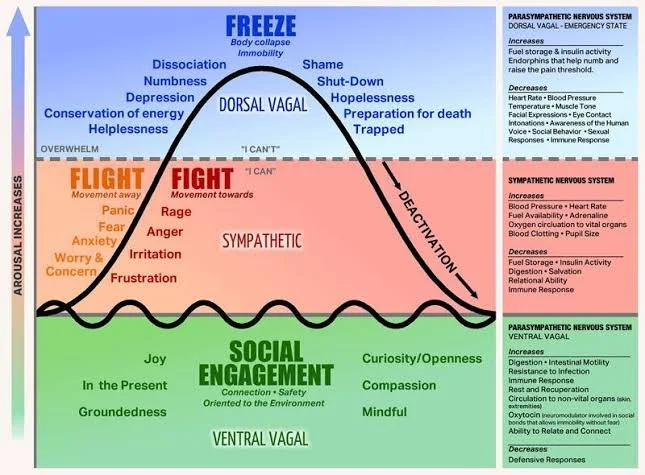
The three states of the Vagus Nerve: The Polyvagal Theory
Why Stress Hijacks Focus
When the nervous system perceives threat — real or perceived — it deprioritises the thinking brain in favour of faster, more reflexive survival circuits. Survival takes precedence over sustained thought. This is a sensible design when there's a genuine emergency. The trouble is when the nervous system gets stuck scanning for threat even in ordinary, safe moments, focus becomes the casualty.
Where the Spine Comes In
The nervous system relies on accurate, ongoing feedback from the body to know whether it's safe. This feedback travels largely through the spine, which houses and protects the communication pathway between brain and body.
When that communication is compromised — what we refer to as vertebral subluxation — the brain can struggle to accurately read what's happening in the body. From a vitalistic perspective, this static or "noise" in brain-body communication can be enough to keep the nervous system leaning toward a defensive, sympathetic-dominant state, even when nothing in the environment warrants it. The body ends up bracing for a threat that was never actually there, and attention pays the price.
This is one of the reasons nervous system regulation — supporting clear, accurate communication between brain and body — is such a foundational piece of the picture when we talk about focus, calm, and resilience.
Measuring It: HRV as a Window Into Regulation
Heart rate variability (HRV) gives us a window into this. Higher HRV generally reflects a nervous system with more flexibility to shift out of stress states and into calm, focused ones. Lower HRV tends to correlate with a nervous system that's more locked into reactivity. At Lume Chiropractic, we use tools like our INSiGHT Scanner to measure HRV alongside other markers of autonomic function, giving us — and you — a clearer picture of how your nervous system is coping.
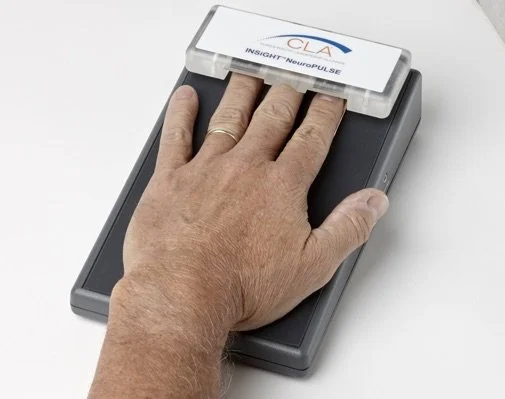
A simple HRV scan can give us enormous insight on what is really happening in your Nervous System.
The Takeaway
Concentration isn't purely a mindset. It's a state your nervous system needs to be supported into. When brain-body communication is clear, the nervous system has a far better chance of settling into the calm, engaged state that focus actually requires.