
Why Tension Headaches Start in the Nervous System, Not the Head.
If you get frequent tension headaches, it's tempting to treat them as a "head problem" — something to manage with painkillers and hope it passes. But for many people, the root of a tension headache isn't really in the head at all. It's in how the nervous system is functioning.
Stress Shows Up as Muscle Guarding
When the nervous system shifts into a sympathetic, stress-dominant state, one of its jobs is to prepare the body for action — which includes increasing tone in key muscle groups, particularly around the neck, jaw, shoulders, and scalp. Held for long enough, this low-grade bracing in the suboccipital muscles (at the base of the skull), upper traps, and jaw becomes a classic driver of tension-type head pain.
The Neck-Head Connection Is Wired In
There's an anatomical reason head and neck tension are so tightly linked. The trigeminal nerve, which supplies sensation to the head and face, converges with nerves from the upper neck at a shared processing hub in the brainstem — the trigeminocervical nucleus. Because of this shared wiring, irritation or tension in the upper cervical spine can be interpreted by the brain as head pain. The two regions are neurologically tangled together, which is part of why neck tension so often precedes or accompanies a headache.
Autonomic Dysregulation and Blood Flow
Beyond muscle tension, a dysregulated autonomic nervous system can influence blood vessel tone, altering blood flow patterns to the scalp and the meninges — the tissue layers surrounding the brain. This is thought to be a contributing factor in some headache presentations.
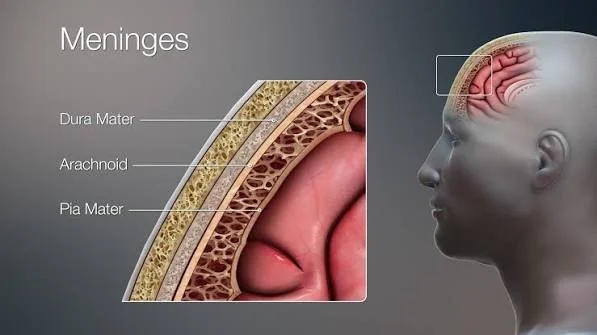
The spinal meninges
Why Recovery Matters as Much as the Trigger
A nervous system stuck in sympathetic dominance also struggles to downshift into rest-and-digest states — the state in which muscles actually get the chance to release tension they've been holding. So it's not only that stress builds tension; it's that a dysregulated nervous system has fewer opportunities to unwind it.
Where Upper Cervical Function Comes In
This is part of why craniocervical and upper cervical function is often a focus for people who experience frequent tension headaches. The goal isn't to "fix" the headache directly — it's to support clear communication in this region of the nervous system, reducing the guarding and neurological noise that so often feeds it.
The Takeaway
A tension headache is rarely just a head issue. It's frequently a downstream sign of a nervous system that's been stuck in a stress state for too long, without enough opportunity to release and recover.