
POTS, Dysautonomia & the Nervous System: Could Your Body Be Stuck in Survival Mode?
Postural Orthostatic Tachycardia Syndrome is becoming increasingly recognised, yet many people living with symptoms still feel unheard, confused or exhausted trying to find answers.
Symptoms like:
Dizziness when standing
Racing heart
Brain fog
Fatigue
Sensory overwhelm
Poor sleep
Anxiety-like symptoms
Headaches and digestive issues
are often dismissed as “just stress” — but for many people, these symptoms may reflect a deeper issue involving the autonomic nervous system.
What is the autonomic nervous system?
The Autonomic Nervous System is the master control system responsible for regulating automatic functions in the body, including:
Heart rate
Blood pressure
Breathing
Digestion
Hormones
Stress responses
Circulation
Temperature regulation
A healthy nervous system is adaptable. It knows when to shift into action and when to shift back into healing and recovery.
But when the nervous system becomes overwhelmed, stressed or dysregulated, the body can lose some of that adaptability.
This is where dysautonomia can occur.
What is dysautonomia?
Dysautonomia is an umbrella term describing dysfunction of the autonomic nervous system.
In people with POTS, the nervous system often struggles to regulate circulation and blood flow effectively when changing posture — especially when standing.
Instead of adapting smoothly, the body may overcompensate by dramatically increasing heart rate.
For some people, this can feel like the body is constantly stuck in “fight or flight.”
Could past trauma influence nervous system regulation?
Many people experiencing autonomic dysregulation have a history of physical stress or trauma to the nervous system, including:
Birth trauma or forceps delivery
Concussion or head injury
Whiplash
Chronic stress
Physical trauma
Repeated falls or impacts
Long periods of overwhelm or exhaustion
While every person is different, these experiences may influence how the brain and body communicate and adapt over time.
From a neurologically focused chiropractic perspective, unresolved neurospinal stress patterns may contribute to reduced adaptability and increased stress physiology within the nervous system.
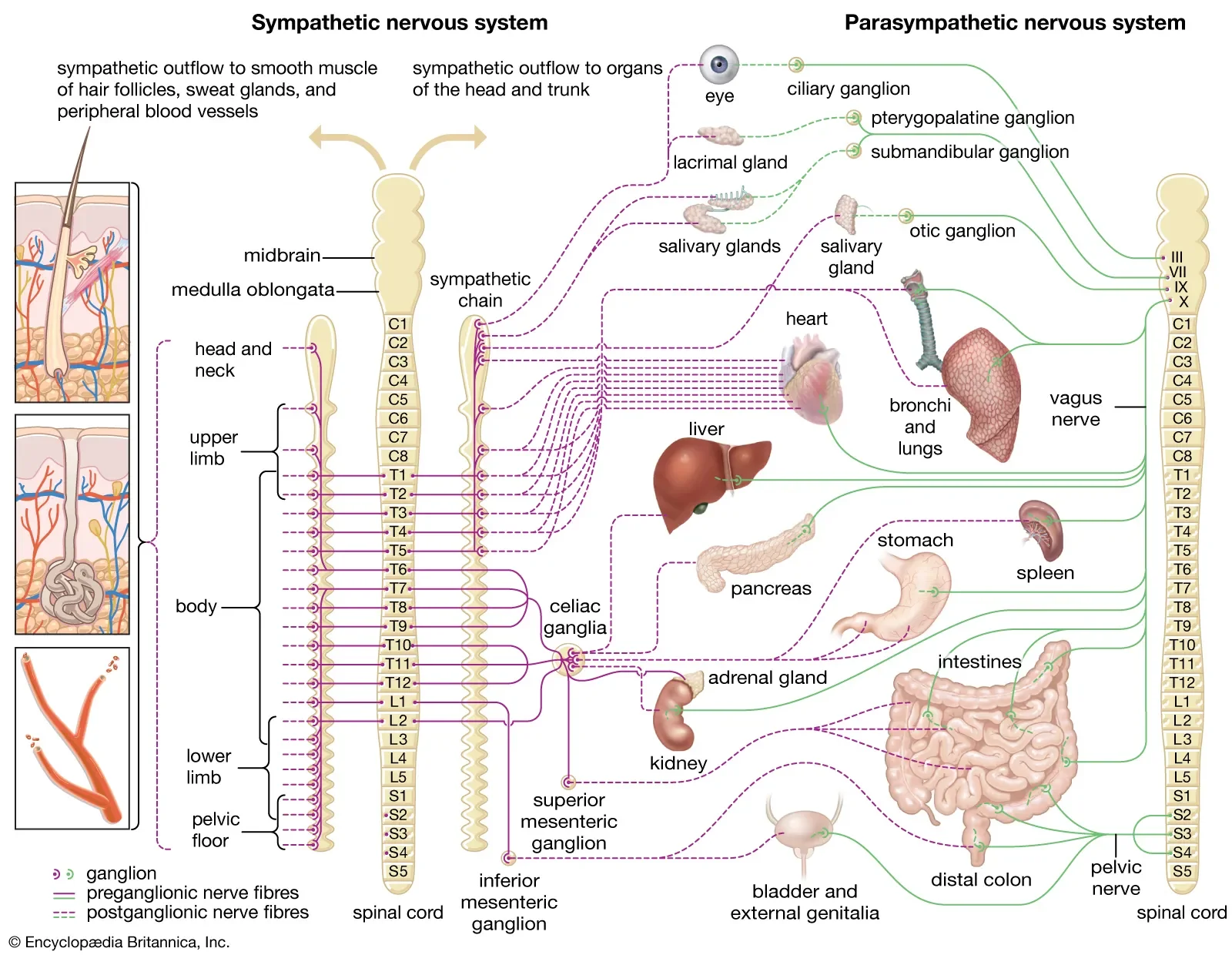
The Autonomic Nervous System
Looking beyond symptoms
At Lume Chiropractic, we believe it’s important to look beyond symptoms alone and assess how the nervous system is functioning and adapting.
This is why we use Insight neurological scans to measure patterns associated with nervous system stress and regulation.
These scans may include:
Heart rate variability (HRV)
Surface EMG muscle tension scanning
Thermal scanning
Stress adaptation patterns
These assessments do not diagnose POTS or dysautonomia, but they can provide valuable insight into how the nervous system may be functioning under stress.
Why does this matter?
The nervous system controls and coordinates every system in the body.
When the body is stuck in chronic stress physiology, people may experience:
Fatigue
Poor recovery
Sleep disturbance
Emotional overwhelm
Digestive changes
Increased tension
Reduced resilience to daily stressors
By assessing and supporting nervous system adaptability, many people report improvements in:
Regulation and calmness
Sleep quality
Energy and resilience
Stress handling capacity
Overall wellbeing
A different conversation around health
If you or your child is experiencing symptoms associated with autonomic stress or dysregulation, it may be worth exploring how the nervous system is adapting and functioning overall.
Especially if there is a history of:
Birth trauma
Concussion
Chronic stress
Repeated physical strain
Sensory overwhelm
Sometimes the body isn’t broken — it may simply be overwhelmed and struggling to adapt efficiently.
A neurological chiropractic assessment and Insight scan may help provide a clearer picture of how your nervous system is functioning and whether stress patterns may be impacting your health and wellbeing.