
Everything you need to know about Seasonal Allergies.
Mia had reached that familiar seasonal pattern—blocked nose every morning, itchy eyes after school, and a constant need to blow her nose during spring sport. Her parents initially assumed it was “just colds again,” but when it kept returning every year around the same time, they started to suspect something deeper was going on.
Like many Australian families, they were dealing with what we commonly call seasonal allergies, or hay fever.
And in Australia, it’s far more common than most people realise.
What are Seasonal Allergies (Hay Fever)?
Allergic Rhinitis—commonly known as hay fever—are immune system reactions triggered by airborne allergens such as pollen, grasses, weeds, and mould spores.
In Australia, seasonal allergies tend to follow very predictable patterns based on climate and plant pollination cycles.
Around 1 in 5 Australians experience hay fever symptoms each year
Rates are particularly high in children and young adults
Symptoms often peak during spring and early summer
Unlike a cold, which resolves within a week or so, allergy symptoms can linger for weeks to months, as long as the immune system is reacting to environmental triggers.
The Australian Seasonal Allergy Calendar
Australia’s seasons are opposite to the Northern Hemisphere, which changes how and when allergies show up.
🌸 Spring (September – November)
This is the peak allergy season in Australia, especially in southern states like NSW, Victoria, and South Australia.
Main triggers:
Grass pollen (especially ryegrass)
Tree pollens (birch, plane, cypress, oak)
High wind days spreading pollen widely
This is also the season linked to high pollen counts and “thunderstorm asthma” events, particularly in Melbourne and surrounding regions.
☀️ Summer (December – February)
Grass pollen can remain high in early summer
Heat and humidity increase irritation of nasal passages
Outdoor mould exposure increases after storms and rain
🍂 Autumn (March – May)
Mould spores become more prominent as leaves decay
Weed pollen can persist in warmer regions
Some children experience a second “mini flare-up” season
❄️ Winter (June – August)
Outdoor pollen drops significantly
Symptoms often shift to indoor triggers:
Dust mites
Pet dander
Indoor mould (especially in damp homes)
What’s Actually Happening in the Body?
From a conventional perspective, allergies are seen as the immune system “overreacting” to harmless particles like pollen.
But at a deeper level, we also need to ask:
Why is the immune system reacting so strongly in the first place?
When a sensitised person inhales pollen:
The immune system identifies it as a threat
Histamines and inflammatory chemicals are released
Symptoms appear: sneezing, congestion, itchy eyes, fatigue
But this is only part of the story.
The Gut–Immune–Nervous System Connection
Modern research increasingly shows that:
Around 70–80% of immune activity is influenced by gut-associated immune tissue (GALT)
The gut and brain are constantly communicating via the vagus nerve
Immune responses are heavily shaped by gut bacteria balance
At Lume Chiropractic, we refer to this as the GUT–Immune–Nervous System axis.
When the gut is inflamed or imbalanced, the immune system becomes more reactive. When the nervous system is under stress, this regulation becomes even more sensitive.
The “Perfect Storm” of Allergies
Seasonal allergies rarely come from one single cause. Instead, they often develop through a combination of stressors over time:
Early life stress or birth stress (forceps, vacuum, C-section)
Antibiotic use affecting gut microbiome diversity
Chronic stress and poor sleep
Highly processed, inflammatory diets
Environmental load (pollution, chemicals, allergens)
This accumulation creates what we call the Perfect Storm: a sensitised nervous system + an imbalanced gut + an overactive immune response.
The result? The body reacts to everyday environmental triggers as if they are threats.
The Nervous System Role (Often Overlooked)
The autonomic nervous system controls immune regulation through a balance between:
Sympathetic (stress / “fight or flight”)
Parasympathetic (rest/repair / immune regulation)
When the system is stuck in sympathetic overdrive:
Histamine responses are amplified
Inflammation is increased
Recovery and regulation are reduced
This is where we often see patterns consistent with neuro-immune dysregulation, or what we assess through neurological scanning and function testing in practice.
Insight Scans in Practice
At Lume Chiropractic, we use INSiGHT Scans to assess how the nervous system is functioning and adapting to stress.
These scans help us understand:
How efficiently the nervous system regulates stress
Areas of tension and dysregulation
How this may be influencing immune and gut function
It gives families a clearer picture of why the body may be overreacting—rather than just focusing on symptom management.
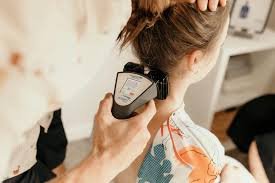
Insight Scans are non-invasive tests that tell us just how well your Nervous System is actually working.
Practical Ways to Support Seasonal Allergies
While we always aim to look at the root cause, there are also simple, supportive steps families can take at home.
🌿 Reduce pollen exposure
Check daily pollen forecasts (especially in spring)
Keep windows closed on high pollen days
Shower and change clothes after being outdoors
Dry clothes indoors during peak pollen season
🏠 Support the indoor environment
Use HEPA air purifiers in bedrooms
Vacuum with HEPA filtration
Reduce dust accumulation (soft toys, heavy fabrics)
Keep humidity balanced (avoid damp areas)
🥗 Support the gut
Increase fibre-rich whole foods (vegetables, fruit, legumes)
Include fermented foods if tolerated (yoghurt, kefir, sauerkraut)
Reduce ultra-processed foods and excess sugar
Support hydration daily
🌬 Nervous system regulation
Encourage slow breathing and outdoor nature time (low pollen periods)
Prioritise sleep and consistent routines
Reduce chronic stress load where possible
When Symptoms Persist
Consider further support if:
Symptoms occur every year at the same time
Sleep, focus, or school performance is affected
There are recurrent sinus or ear infections
Symptoms last longer than 6–8 weeks
In these cases, it may be helpful to explore whether there is an underlying neuro-immune dysregulation contributing to the pattern, rather than treating symptoms alone.
A Different Way to Understand Allergies
At Lume Chiropractic, we don’t see seasonal allergies as something the body is “failing at.”
We see them as a sign that the system is under load, where the gut, immune system, and nervous system are working harder than they should have to.
When these systems begin to regulate and communicate more efficiently, the body often becomes less reactive over time.
Not by avoiding life—but by improving resilience within it.